


 Enquire Now
 WhatsApp Inquiry
Wall Leakage Detection Thermal Scanning in Mumbai | Advanced Leak Detection by Dr. Civil Contractors
Dr. Civil Contractors has 34 years of industry experience in civil repair, waterproofing, leakage investigation, and related building solutions. The company provides thermal scanner-based water leakage detection in Mumbai and uses inspection findings to help identify potential problem areas before recommending suitable repair or waterproofing work. This approach can help property owners address leakage concerns more efficiently while reducing unnecessary wall damage and repeated repairs.
Call Now: 8779888139
What Is Wall Leakage Detection Thermal Scanning in Mumbai?
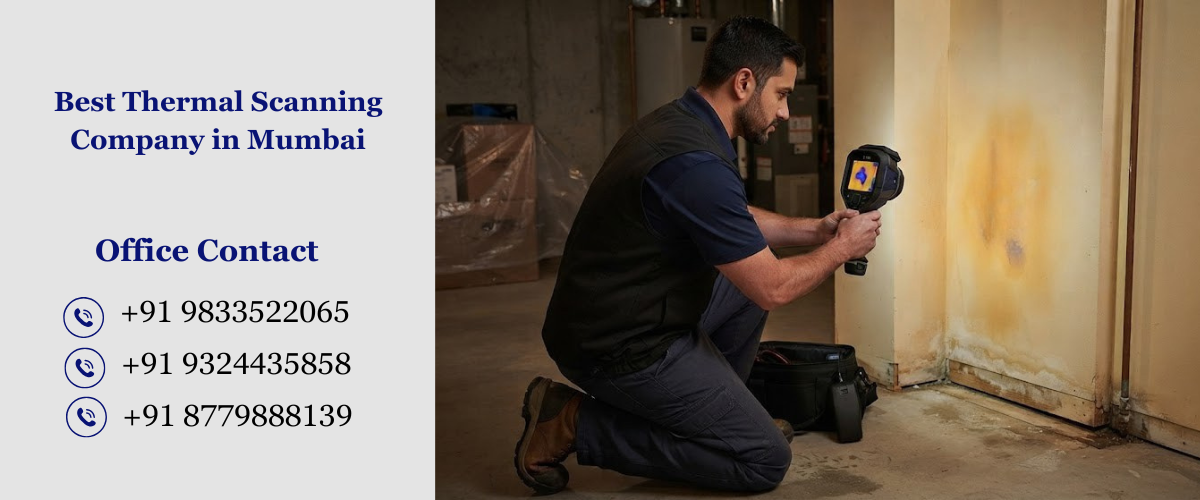
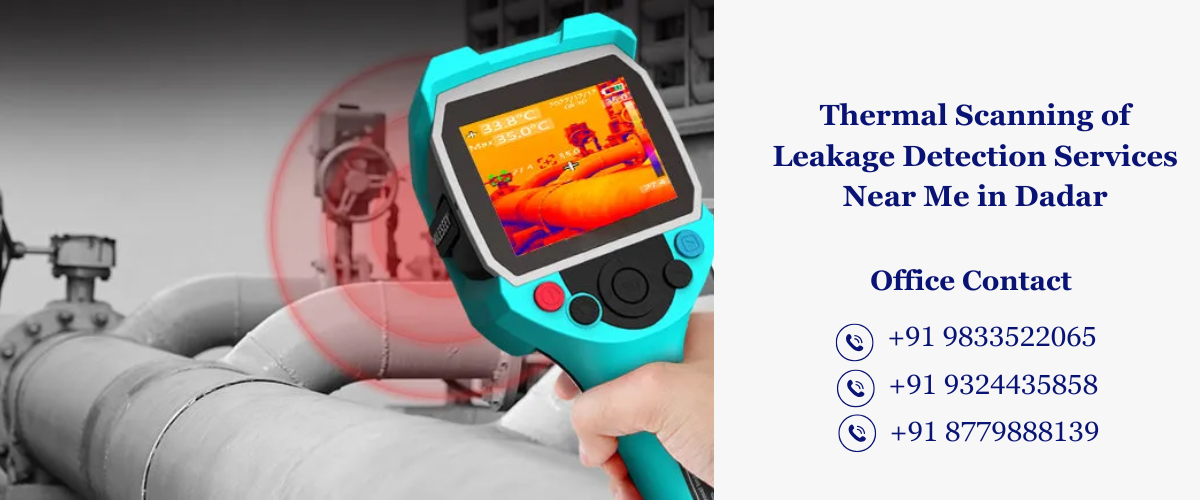
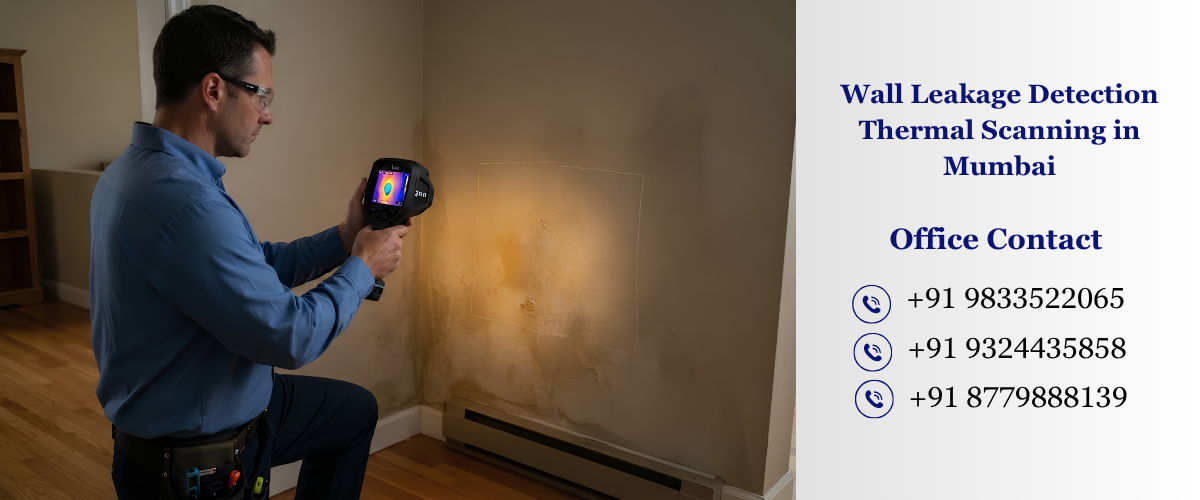
Wall Leakage Detection Thermal Scanning in Mumbai is an inspection technique that uses a thermal imaging camera to detect temperature differences across building surfaces.
Water and moisture can influence the temperature of construction materials. When a wall contains concealed dampness, the affected area may show a different thermal pattern from surrounding dry material. A trained technician can examine these patterns and identify areas that deserve further investigation.
The major advantage is that the inspection can be carried out without immediately breaking the wall.
Thermal scanning is therefore particularly useful when:
- The leakage source is not visually obvious.
- Dampness appears in one location but the source may be elsewhere.
- Water is travelling through concealed pathways.
- A property owner wants to minimise unnecessary wall damage.
- Conventional visual inspection has not identified the source.
- Leakage repeatedly returns after superficial repairs.
- A building has expensive tiles, finishes, paint, or interiors that should not be unnecessarily disturbed.
It is important to understand that thermal imaging is an investigation and diagnostic aid, not a magic camera that independently proves the exact origin of every leak. Temperature patterns need to be interpreted in the context of building construction, plumbing, weather, ventilation, surface conditions, and other evidence.
Why Is Leakage Detection Important in Mumbai?
Mumbai’s buildings are exposed to humidity, heavy monsoon rainfall, plumbing systems, ageing structures, terrace exposure, external walls, balconies, bathrooms, kitchens, and multiple sources of water ingress.
For example, moisture entering behind a wall may initially produce only a small stain. Over time, it can contribute to:
- Peeling paint
- Bubbling or damaged plaster
- Damp walls
- Musty odours
- Mould or fungal growth
- Ceiling stains
- Tile-related problems
- Corrosion of embedded metal components
- Damage to interior finishes
- Deterioration of building materials
- Repeated waterproofing expenses
How Does Thermal Scanning Detect Hidden Leakage?
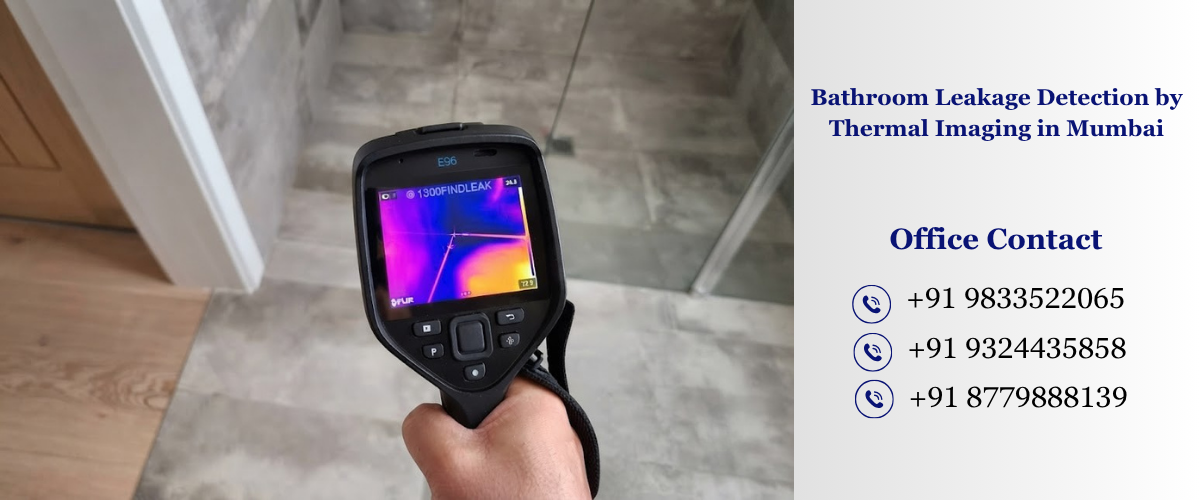
A thermal imaging camera records infrared radiation and converts temperature variations into a visual thermal image.
A wall that appears completely normal to the naked eye may show a different thermal pattern when viewed through a thermal imaging device.
During an inspection, the technician may compare:
- Normal-looking areas
- Suspected damp areas
- Adjacent surfaces
- Temperature variations
- Thermal patterns across the wall
- Possible water pathways
- Areas around plumbing or wet zones
The resulting thermal image can help identify areas that require further attention.
However, thermal scanning should not be interpreted as simply “red means leakage” or “blue means leakage.” Thermal colours and patterns depend on the camera’s settings, environmental conditions, material properties, reflected temperatures, and the inspection environment.
Common Signs That You Need Wall Leakage Detection
Property owners often wait until leakage becomes severe before calling a professional.
That can increase repair complexity.
Consider arranging an inspection if you notice:
- A recurring damp patch
- Peeling or blistering paint
- Discoloured walls
- Moisture marks on ceilings
- A persistent musty smell
- Mould or fungal growth
- Dampness near bathrooms
- Water stains below plumbing areas
- Leakage after rainfall
- Dampness that appears to move from one location to another
- Repeated leakage despite repainting
- Cracks accompanied by moisture
- Unexpected dampness in a supposedly dry room
One particularly important warning sign is recurring leakage after repair.
If a wall has been repaired several times but the problem keeps returning, the visible damage may not be the actual source.
What Can Thermal Scanning Help Identify?
Depending on site conditions, thermal scanning may help investigate potential moisture-related problems in:
Internal Walls
Concealed dampness may occur behind painted walls, plastered surfaces, partitions, or other finished areas.
Bathroom Walls
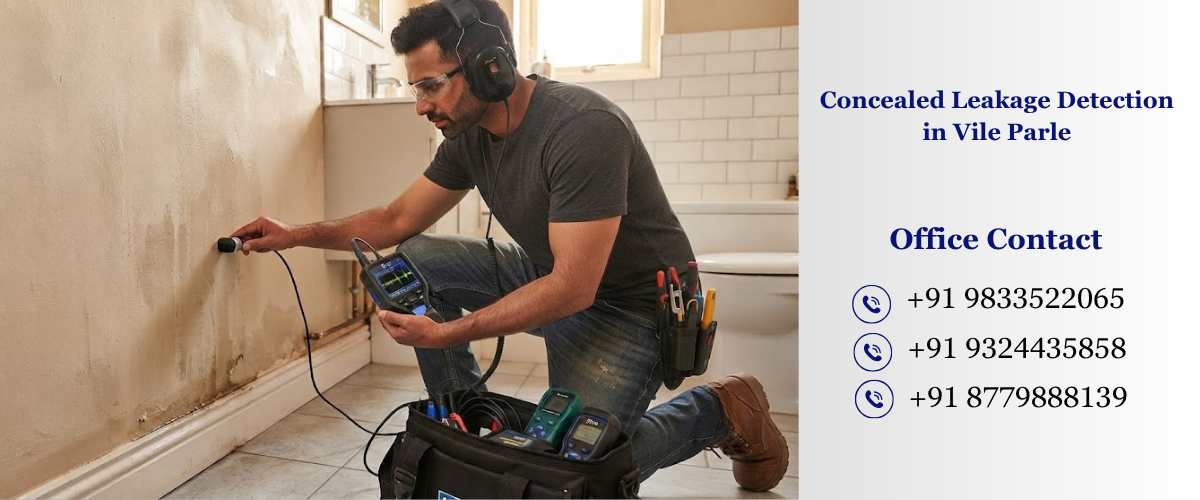
Bathrooms contain multiple water sources, including supply pipes, drainage lines, waterproofing layers, fixtures, and wet-area surfaces.
Kitchen Areas
Sink connections, plumbing lines, concealed pipes, and adjoining wet areas can sometimes contribute to dampness.
Ceilings
A ceiling stain may originate from plumbing, a bathroom above, a terrace, an external area, or another concealed source.
External Walls
Rainwater penetration, cracks, failed joints, and deteriorated exterior surfaces can contribute to moisture ingress.
Terraces
Poor drainage, cracks, damaged waterproofing, or water accumulation can lead to leakage into the areas below.
Balconies
Balcony slabs and junctions can experience water ingress, particularly where drainage and waterproofing have deteriorated.
Plumbing Zones
Hidden plumbing leakage may sometimes produce moisture patterns that are difficult to identify through visual inspection alone.
Wall Leakage Detection Thermal Scanning vs. Traditional Leak Detection
Traditional leakage investigation may involve visual inspection, tapping, moisture assessment, plumbing checks, or in some situations opening portions of a wall.
These methods still have their place.
Thermal scanning adds another layer of investigation.
| Inspection Method | Main Advantage | Potential Limitation |
|---|---|---|
| Visual Inspection | Simple and immediate | Hidden moisture may not be visible |
| Physical Moisture Assessment | Useful for confirming dampness | Does not always identify the source |
| Plumbing Inspection | Useful for suspected pipe leakage | Requires access and technical assessment |
| Wall Opening | Can directly expose concealed areas | Destructive and may require restoration |
| Thermal Scanning | Non-invasive visual investigation of thermal patterns | Requires proper interpretation and suitable conditions |
The best approach is not necessarily to replace every conventional technique with thermal imaging.
Instead, thermal scanning can be integrated into a broader professional inspection process.
Why Non-Destructive Leak Detection Is Valuable
Nobody wants to break a freshly renovated wall just to discover that the leakage is coming from somewhere else.
This is one of the key reasons property owners consider thermal scanning.
A non-invasive inspection can help reduce unnecessary:
- Drilling
- Chiselling
- Tile removal
- Plaster removal
- Paint damage
- Interior disturbance
It can also help technicians narrow down areas that require closer physical investigation.
For luxury apartments, offices, hotels, commercial interiors, and renovated properties, avoiding unnecessary damage can be particularly valuable.
Why Experience Matters in Thermal Scanning
A thermal image can contain a lot of information, but the image alone does not automatically explain the cause.
Consider a wall that shows a temperature difference.
Possible explanations could include:
- Moisture
- Plumbing
- Air leakage
- Surface conditions
- Material differences
- External temperature changes
- Insulation variations
- Environmental effects
A trained technician needs to interpret the image in context.
This is where 34 years of industry experience can add value to the inspection process.
The objective is not merely to produce a thermal image.
The objective is to use inspection evidence to help understand the building problem.
Why Choose Dr. Civil Contractors?
When selecting a leakage detection and civil repair specialist, experience and technical understanding are important.
Dr. Civil Contractors offers:
- 34 years of industry experience
- Thermal scanner-based leakage investigation
- Non-destructive inspection approach
- Civil repair expertise
- Waterproofing-related solutions
- Practical site assessment
- Professional technical assistance
- Focus on identifying potential causes before repair
The company has published dedicated information about thermal scanner services and thermal imaging leak detection in Mumbai, including its use of infrared thermal imaging and non-destructive investigation.
E-E-A-T (Experience, Expertise, Authoritativeness & Trustworthiness)
Experience
Dr. Civil Contractors brings 34 years of industry experience in civil contracting, waterproofing, and leakage detection solutions.
Expertise
Our team uses professional thermal scanning and infrared technology to help identify hidden moisture and potential leakage areas with a non-destructive inspection approach.
Authoritativeness
With extensive experience in civil and waterproofing solutions, Dr. Civil Contractors provides practical, site-focused solutions for residential and commercial properties in Mumbai.
Trustworthiness
We focus on transparent inspection, accurate guidance, and suitable solutions based on the property’s actual leakage condition.
Frequently Asked Questions (FAQ)
Q1. What is thermal scanning for wall leakage?
Ans: Thermal scanning uses infrared technology to identify temperature variations that may indicate hidden moisture or leakage.
Q2. Can thermal scanning detect leakage without breaking walls?
Ans: Yes, it is a non-destructive method that can help locate suspicious areas without unnecessary wall damage.
Q3. Where can thermal leakage detection be used?
Ans: It can be used for walls, ceilings, bathrooms, terraces, balconies, and other areas affected by dampness.
Q4. Does thermal scanning identify the exact leakage source?
Ans: It helps locate suspicious moisture patterns, but further inspection may be required to confirm the exact source.
Q5. How can I contact Dr. Civil Contractors?
Ans: For Wall Leakage Detection Thermal Scanning in Mumbai, call 8779888139.
Contact Dr. Civil Contractors
For professional Wall Leakage Detection Thermal Scanning in Mumbai, contact Dr. Civil Contractors today. Call today for expert assistance and inspection.
- Phone: [ +91 9833522065 /+91 9324435858 / +91 8779888139 ]
- Email: [ info@drcivilcontractors.com ]
- Website: [www.drcivilcontractors.com]
- Address: [ Shop No.3, Gokul Niwas, Near Railway Station, opp. Eastern Court Society, Arya Bhavan, Vile Parle (East), Mumbai – 400057. ]
Conclusion